The Metered Breeze: Reading the Air-Con Fine Print in Caribbean Hotels

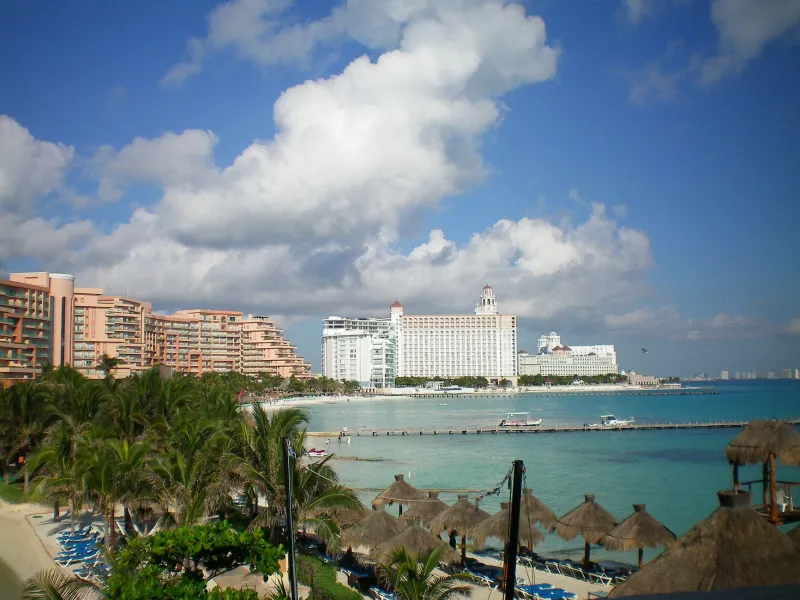
Photo: Carleton H. Graves (d. 1943), Public domain, via Wikimedia Commons
You land at Grantley Adams or Sangster, clear the arrivals hall, and the first blast of Caribbean heat hits you like a warm towel. By the time you reach the room, the air-con is the only thing on your mind. Then you spot the small card on the bedside table: Air conditioning is charged at US$12 per night. Please request the key from reception. Or the unit has a coin meter. Or the booking confirmation, buried somewhere below the cancellation policy, mentions an "energy supplement" that applies to rooms using the AC.
Cool air has become a line item in the Caribbean. Not everywhere, and not always loudly, but enough that UK travellers booking in 2026 should treat air conditioning as something to check rather than assume.
Why cool air became a line item
Caribbean hotels face a genuine cost problem. Electricity is expensive on most islands, and a single split unit running all night in a humid room can eat a serious chunk of a property's overheads. Older buildings leak cool air through louvred windows and poorly sealed doors. Guests from cooler climates often leave the AC on full blast with the balcony door open, which is exactly as wasteful as it sounds.
Some hotels responded by upgrading to inverter units and sealing rooms. Others went the other way: they installed key-card meters that cut the power when you leave, capped the thermostat at 24°C, or moved the cost onto the guest as a visible nightly charge. A few have gone further, installing sub-meters that bill by consumption — rare, but no longer unheard of in villa complexes and serviced apartments.
The result is a patchwork. Two hotels on the same beach can have completely different policies, and the difference is rarely obvious from the photos.
The three ways hotels charge for cool air
Most of the charging models fall into one of three buckets.
The fixed nightly surcharge. You pay a set amount per night, usually somewhere between US$8 and US$25, for the AC to be activated. Sometimes this is framed as an "energy fee" and applies to every room. Sometimes it only applies if you actually want the AC. Ask whether it is compulsory or optional — the wording is often deliberately vague.
The key-card meter. Your room key doubles as a power switch. When you leave, the AC cuts out. This is not a charge as such, but it changes how you use the room: you come back to a warm, damp space and spend the first twenty minutes waiting for the unit to catch up. Some hotels combine this with a nightly cap, after which the AC simply stops until the next day.
The consumption meter. More common in villa rentals and long-stay apartments than in resorts. You are billed for electricity used above a baseline allowance, usually at the end of your stay. The per-unit rate can be steep, and the baseline can be modest. If you are renting a villa in 2026, this is the one to read carefully.
Where it hides in the booking terms
Air-con clauses rarely appear in the headline rate. They surface in a few predictable places: the "facilities" section, where AC might be listed as available for a fee; the "extra charges" or "house rules" tab; the small print of a package booking; and the pre-arrival email, which is often the first time a guest sees the charge in plain language.
On booking sites, search the listing text for words like surcharge, supplement, metered, energy and key card. Check the guest reviews too — not the headline scores, but the recent ones that mention the room temperature or a surprise bill at checkout. A single review saying "AC was extra and we weren't told" is worth more than a dozen five-star ratings.
If you are booking a villa, ask for the electricity policy in writing before you pay the deposit. A legitimate owner will have a clear answer. A vague one is a warning sign.
Questions to ask before you pay
A short list, whether you are emailing a small guesthouse or booking through a UK operator:
- Is air conditioning included in the rate, or is there a nightly charge?
- Is the charge per room, per person, or per unit of electricity?
- Is the AC controlled by a key card, a thermostat cap, or a timer?
- Are there rooms without AC, and are they cheaper?
- If the AC is metered, what is the baseline allowance and the per-unit rate?
- Is the charge waivable if you choose not to use the AC?
Ask these before you pay the deposit, not after. A hotel that cannot answer clearly is telling you something useful.
Budgeting for cool air in 2026
For a couple on a two-week holiday, a US$15 nightly AC charge adds roughly £220 to the trip at current exchange rates. That is not nothing, but it is also not a reason to cancel. The trick is to price it in at the booking stage rather than discover it at checkout.
A rough working rule: if the headline rate looks unusually good for the island and the season, check whether AC is included. Budget an extra £10–£20 per night for a mid-range hotel room with a paid AC clause, and more for a villa where you plan to run multiple units. If you are travelling with children or in the wetter months, assume you will use the AC more than you think.
There is also a middle path. Many Caribbean hotels now offer rooms with ceiling fans and screened windows as a cheaper alternative. In the drier islands and the cooler months, that can be perfectly comfortable — and it sidesteps the surcharge entirely. It is worth asking whether a fan-cooled room exists.
When to pay, when to push back
The charge itself is not unreasonable. Hotels pay for the electricity, and a metered system encourages guests not to cool an empty room. The problem is opacity. A clause that appears only at check-in, after the deposit is gone, is not a pricing policy — it is a trap.
If you arrive and find an undisclosed AC charge, ask to see where it was stated in your booking confirmation. If it was not there, say so politely and ask for it to be waived. Most hotels will absorb it rather than argue. If it was there, pay it and move on — but note it for next time.
Cool air in the Caribbean is no longer free by default. Treat it like baggage allowance or a resort fee: read the small print, ask the obvious question, and build it into the budget. Then you can get back to the important business of deciding whether the beach or the pool gets the first afternoon.